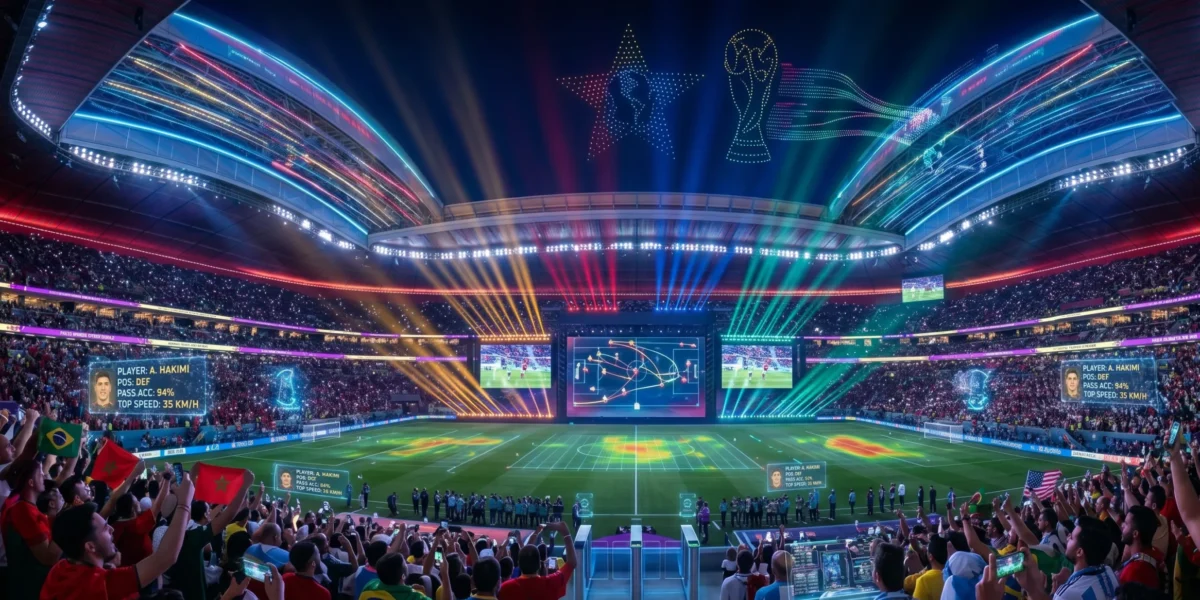
The FIFA World Cup has always been about unforgettable moments.
The roar of the crowd.
The tension before kickoff.
The celebrations after a dramatic goal.
But in 2026, fans may experience something completely different.
Ad Slot – in_article
The 2026 FIFA World Cup will not only be the biggest tournament in football history—it could also become the most technologically advanced sporting event ever organized.
From artificial intelligence and digital ticketing to immersive fan experiences and smart stadiums, technology is set to transform how millions of people experience football.
The future of the World Cup has arrived.
A New Era of Smart Stadiums
The stadiums hosting the 2026 FIFA World Cup are among the most modern sports venues in the world.
Designed with cutting-edge technology, these stadiums aim to make every aspect of the fan journey smoother, faster, and more enjoyable.
Instead of simply attending a match, fans will be able to interact with a fully connected digital environment.
The stadium itself becomes part of the experience.
AI Will Change the Fan Experience 🤖
Artificial Intelligence is expected to play a major role throughout the tournament.
AI-powered systems could help fans:
- Find their seats faster
- Receive personalized recommendations
- Navigate stadiums more easily
- Access real-time match information
- Improve security and crowd management
Imagine receiving live updates, transportation suggestions, restaurant recommendations, and match statistics directly through your smartphone during the event.
This level of personalization could completely change how fans interact with the World Cup.
Goodbye Paper Tickets 🎟️
One of the biggest changes will be the widespread use of digital tickets.
Instead of carrying printed tickets, most supporters are expected to use secure mobile tickets stored on their phones.
Benefits include:
- Faster stadium entry
- Reduced fraud
- Better security
- Easier ticket management
- Instant updates from organizers
For fans traveling internationally, digital tickets will simplify the entire process from purchase to stadium access.
Immersive Technology Will Bring Fans Closer Than Ever
The World Cup experience will extend far beyond the stadium.
Emerging technologies such as:
- Augmented Reality (AR)
- Virtual Reality (VR)
- Interactive mobile applications
- Real-time statistics platforms
could allow fans to experience matches in entirely new ways.
Imagine pointing your phone toward the pitch and instantly seeing player statistics, tactical information, or live match insights.
Technology may transform every seat into a premium viewing experience.
The Rise of the Connected Fan 📱
Today’s football supporters are constantly connected.
They share moments on:
- TikTok
- YouTube
- X
World Cup 2026 is expected to be the most social-media-driven tournament ever.
Smart stadium infrastructure will allow fans to:
- Upload content instantly
- Share videos in real time
- Access interactive fan zones
- Participate in digital activities during matches
The line between physical and digital experiences continues to disappear.
Faster and Smarter Transportation 🚆
Technology will also improve how fans travel between stadiums and host cities.
Smart transportation systems could provide:
- Live traffic updates
- Personalized route suggestions
- Integrated public transport information
- Real-time event notifications
For a tournament spread across the United States, Canada, and Mexico, efficient transportation will be essential.
Enhanced Security Through Technology 🔒
Managing millions of fans requires advanced security solutions.
Modern technologies may include:
- AI-assisted crowd monitoring
- Smart surveillance systems
- Biometric verification
- Digital access control
These innovations help create safer environments while reducing waiting times and improving the overall fan experience.
More Than a Football Tournament
World Cup 2026 will be more than just a competition.
It will be a showcase of how technology can transform global sporting events.
Fans will not simply watch matches.
They will interact, connect, share, and experience football in ways that were impossible just a few years ago.
The stadium of the future is no longer a concept.
It is becoming reality.
Final Thoughts
The 2026 FIFA World Cup promises to be historic for many reasons.
- More teams
- More matches
- More host cities
- More fans
But perhaps the most important transformation will happen through technology.
Artificial intelligence, smart stadiums, digital tickets, immersive experiences, and connected fan services are set to redefine what it means to attend a World Cup.
For millions of football supporters around the world, 2026 may become the first truly digital World Cup.
And that could change football forever. ⚽🌍🚀